
HV switchboards, 11kV ring main units, transportable switchrooms and site infrastructure for mining and resources operations. Delivered by people who have run HV underground, not just specified it.
The Real Problem
Mine sites do not run on the same gear, the same standards or the same risk tolerance as a commercial building. HV reticulation, transportable switchrooms, hazardous areas, generator power plants and switching that has to be exactly right because there is no second chance. Most switchboard suppliers have simply never worked in that environment.
The result is sites engaging metro contractors who treat HV as oversized LV, struggle with mobilisation and logistics, and have never written a switching program or worked an isolation under mine site discipline. The gap between specifying mining infrastructure and delivering it is the whole problem.
Mining switchboards are built to AS/NZS 61439 and the relevant hazardous-area standards, with FIFO mobilisation and site inductions arranged so mining switchboards work is delivered safely on remote Queensland sites.
Metro contractors out of their depth on HV / Transportable switchroom and mobilisation gaps / Orphaned HV assets with no maintainer / Switching and isolation handled by people without the experience
WHERE IT IS NEEDED
Mine site electrical work spans far more than a single board. These are the areas where genuine HV and remote-site experience separates delivery from disappointment.
Sector Constraints
Everything about mining electrical work raises the bar: voltage, remoteness, safety discipline and the consequence of error. The work is planned around the realities of operating sites and the standards they answer to.
Switchrooms and boards are built and tested off site wherever possible, so site time on a remote operation is mobilisation and changeover, not construction.
Project Delivery
From engineering scope through procurement, build, mobilisation and switching, the project runs under one accountable contractor instead of a chain of subcontractors.
Scope, drawings, site requirements and any HV or authority correspondence.
RPEQ engineering coordinated, HV and compliance requirements confirmed.
Switchgear, switchrooms and boards sourced and built off site, tested before dispatch.
Logistics, transport and mobilisation planned to the remote site.
Switching programs, installation, testing and certified energisation.
Certification, single line diagrams, as-builts and maintenance arrangements for HV assets.

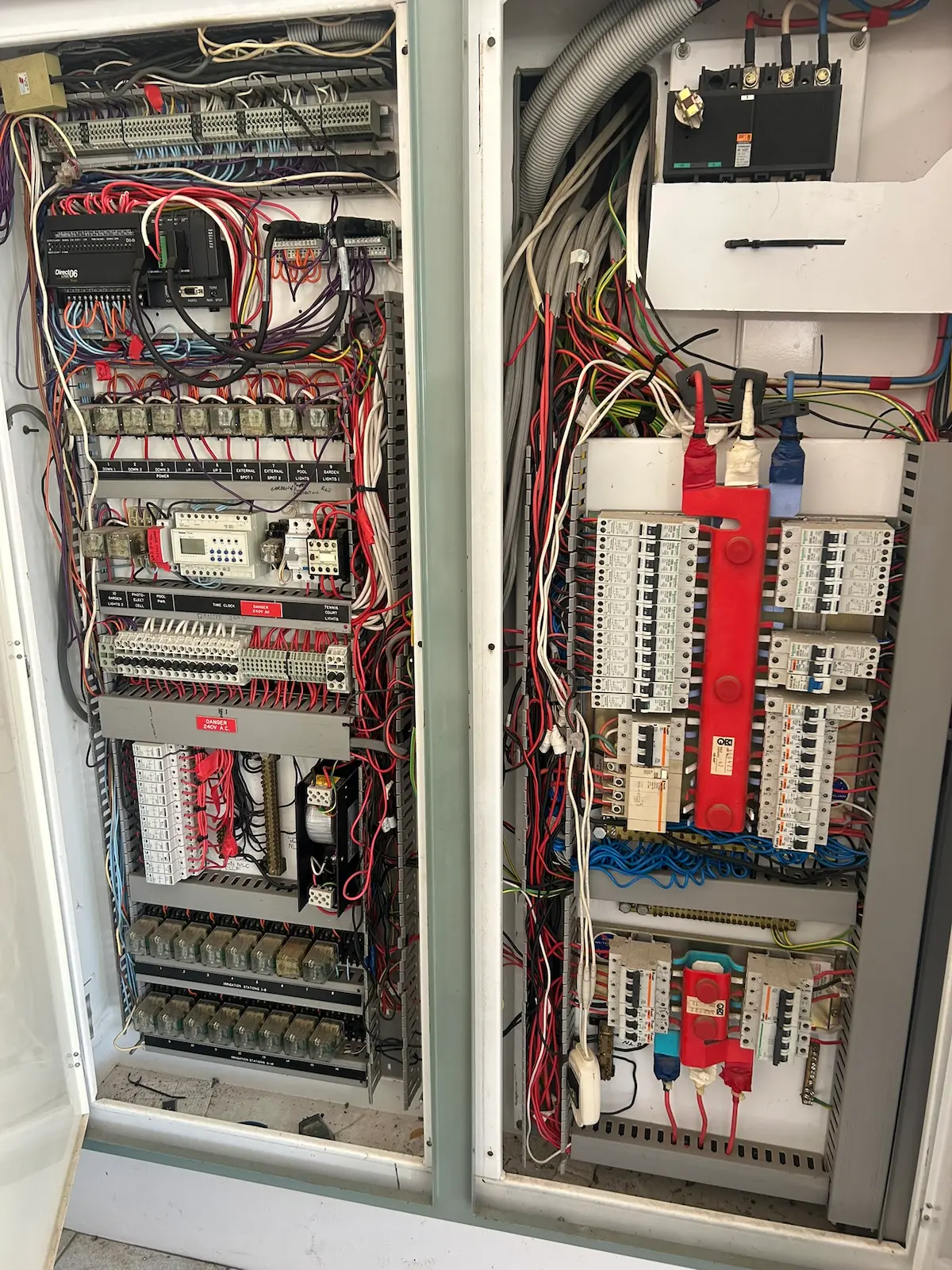
Industrial control and distribution board
Relevant Services
From HV infrastructure to MCCs and emergency response, these are the switchboard services most commonly required across mining and resources operations.
Site main boards and distribution replaced or upgraded, certified to AS/NZS 61439.
Supply, metering and capacity works where the site connects to the network.
11kV switchboards, RMUs, substations and HV switching, the core of mine site reticulation.
Thermal scanning and condition reporting for remote and critical switchgear.
Failed switchgear and fault response on operating sites where downtime is critical.
Scheduled maintenance for HV and LV assets, keeping remote infrastructure off the breakdown list.
Wash plant, conveyor and process board distribution and motor control.
OUR APPROACH
Mine site electrical infrastructure carries consequences nothing in commercial work does. HV that has to be switched exactly right, transportable infrastructure that has to arrive complete, gear that has to survive harsh environments and remote logistics that leave no room for a forgotten component. We deliver from the experience of having done it: underground 11kV operations, multi-generator power plants and end-to-end greenfield mine delivery. Projects and infrastructure delivered to sites across Queensland, with regional and remote delivery planned into every program.
What We Design Around
Who This Page Is For
This page is for mine site electrical engineers, project managers, superintendents, contracts and procurement teams, and operations managers across mining, resources and remote industrial sites.
Related Industries
Both, and the mining came first. Three years underground at Lady Loretta running 11kV substations, ring main units and live HV switching, plus end-to-end electrical delivery of a remote open-cut gold mine in central Africa, including a multi-generator power plant, wash plants and conveyors. The commercial switchboard business grew out of that, not the other way around.
11kV switchboards, ring main units, substation establishment, transformer works, HV switching and isolation, all coordinated with RPEQ-certified engineering to AS/NZS 2067. HV is core capability here, not a subcontracted add-on.
Yes. Transportable and containerised switchrooms are built and tested off site, then mobilised to the operation, so remote site time covers placement and connection rather than construction. This is exactly the model used on remote mine delivery.
Yes. Remote and regional delivery, mobilisation and logistics are planned into the program from the start. The Africa project was a remote greenfield site delivered end to end, so remote logistics is a known quantity, not a hurdle discovered mid-project.
Mining and HV project costs vary enormously, from a single RMU through to full site reticulation and power plants, so honest numbers only come after the engineering scope is set. The drivers are HV scope, engineering depth, switchroom and switchgear specification, remoteness and logistics. Pricing is confirmed after the project review and engineering scope.
Yes. Switching programs, access permits and HV isolations are delivered for our own works and to support site shutdowns and other contractors. The switching discipline comes from years of live HV operations underground, where it is not optional.
RPEQ-certified engineering is coordinated as part of every project that requires it, which for HV under AS/NZS 2067 is effectively all of them. Protection studies, earthing design and certified documentation are delivered through RPEQ-registered electrical engineers as part of the scope.
Yes. Mine and industrial sites often carry HV assets nobody currently maintains. The asset is inspected, tested and documented, defects are staged for rectification, and it goes onto a maintenance schedule with the records the operation needs.
Yes. Generator control, multi-generator power plants and off-grid distribution are part of the background, including maintaining 5.8MW of generation at Lady Loretta and delivering a multi-generator plant on the Africa project. Generation, control and distribution are delivered together, not in isolation.
Yes. Hazardous area gear, harsh environment ratings and the standards mine sites demand are part of how the work is specified and built. The requirements go into the design, not into a variation later.
Queensland is home base, and the iPower years covered install and commissioning across every state of Australia, with international delivery in central Africa. Remote and interstate mining work is considered on its merits, with mobilisation planned into the project.
Send through the scope, drawings, site requirements and any HV or authority correspondence. We review within one business day and come back with the practical next step, usually an engineering and scope conversation.
Send through your scope, drawings and site requirements. We review the details and advise the next practical step within one business day.