QUICK ANSWER
EV charging adds significant continuous load to a site, and many commercial switchboards do not have the spare capacity to support it. Before installing chargers, the switchboard and supply need to be assessed. Often the board needs more capacity, load management, or an upgrade, and larger installations may trigger a supply increase and CT metering through Energex.
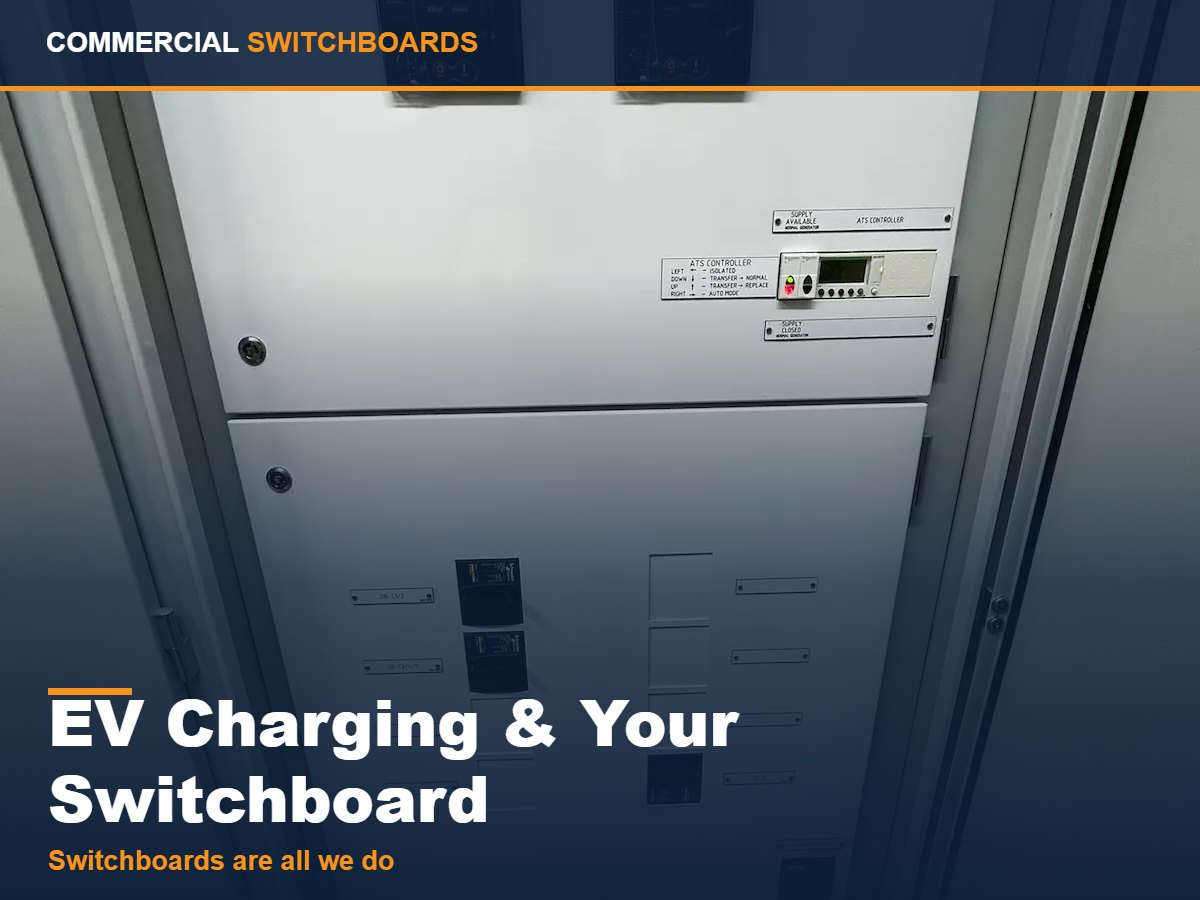
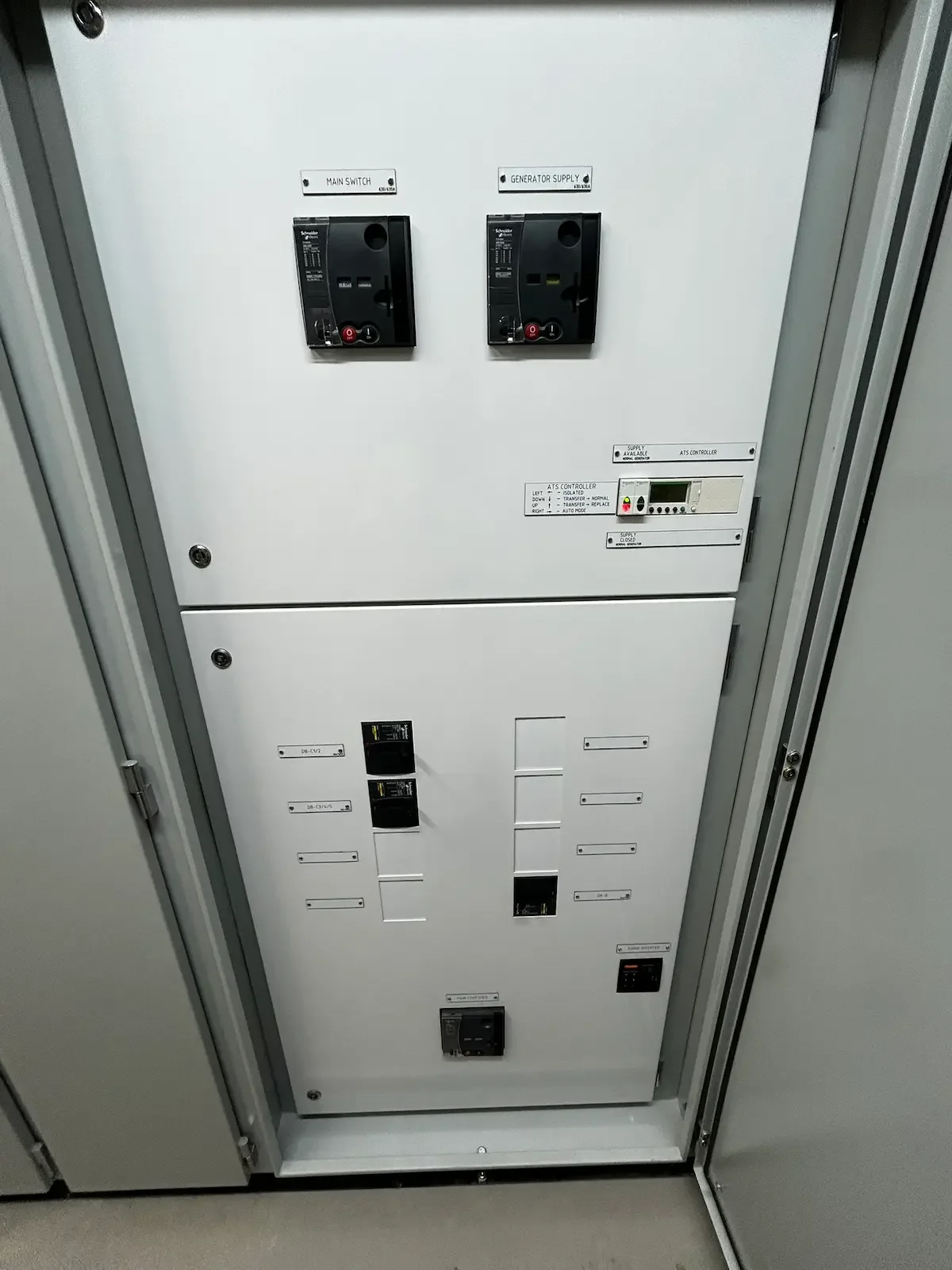
Adding EV charging to a commercial site sounds simple, but the chargers are only half the job. The real question is whether your switchboard and supply can handle the extra load. EV chargers draw heavy, sustained current, and bolting them onto a board that is already near capacity is a fast way to cause nuisance tripping, overheating or a failure. This guide explains how EV charging affects your commercial switchboard and what to check before you install.
Why EV charging is a big load
A single fast commercial EV charger can draw as much power as a large part of a small building. Unlike intermittent loads, charging runs at a high, steady current for long periods. Multiply that across several chargers in a car park and the demand on the commercial switchboard is substantial. The board, the main switch, the cabling and the supply all have to be sized for it, which is exactly what older boards were never designed for.
What to check before installing EV chargers
- Spare capacity on the existing switchboard and main supply
- The rating of the main switch, busbars and incoming cabling
- Whether load management can spread demand across chargers
- If a supply increase and CT metering are needed
- Compliance of the board for the new circuits and protection
Options for supporting EV charging
| Situation | Typical solution |
|---|---|
| Board has spare capacity | Add protected circuits for the chargers |
| Limited capacity | Load management to share available supply |
| Insufficient capacity | Switchboard upgrade and possible supply increase |
| Large installation | Supply upgrade with CT metering via Energex |
When EV charging needs a switchboard upgrade
If the board is already near capacity, adding EV charging usually means a switchboard upgrade to increase capacity and add compliant, protected circuits. For larger installations the supply itself may need increasing, which brings in CT metering and Energex coordination. Planning this up front avoids installing chargers that trip the board or cannot all run at once.
Load management vs upgrading
Why use a switchboard specialist
EV charging is a switchboard and supply question as much as a charger question. Because switchboards are all we do, we assess the board and supply, design the capacity and protection, coordinate any supply increase with Energex, and make sure the commercial switchboard safely supports the chargers now and as you add more.
EV charging and switchboards: frequently asked questions
Does EV charging need a switchboard upgrade?
Often yes. EV chargers add heavy continuous load, so if the board is near capacity it usually needs an upgrade to add capacity and compliant circuits.
How much load does a commercial EV charger add?
A fast commercial charger draws a high, steady current for long periods, comparable to a large portion of a small building, which is why the board and supply must be sized for it.
What is load management for EV charging?
Load management shares the available supply between chargers so you can add EV charging without exceeding the board capacity, often avoiding a full upgrade.
Will EV charging need a supply increase?
For larger installations, yes. A supply increase brings in CT metering and Energex coordination as part of the project.
What should I check before installing EV chargers?
The spare capacity of the switchboard and supply, the rating of the main switch and cabling, and whether load management or an upgrade is needed.
Who should assess my switchboard for EV charging?
A specialist switchboard contractor who can assess the board and supply and design the capacity and protection to AS/NZS 61439.
Related guides
- What a commercial switchboard upgrade costs
- CT metering explained
- 3 phase switchboard upgrades explained
Standards and references
About the author
Anthony Nuich is the owner of Commercial Switchboards, the specialist switchboard division of SEQ Sparky Pty Ltd, holding QLD Electrical Contractor licence #90899. With 10+ years assessing and upgrading commercial switchboards for new loads across Brisbane and Queensland, Anthony reviews every project personally.
If you are planning EV charging and need to know whether your commercial switchboard can handle it, request an initial project review.