QUICK ANSWER
CT metering, or current transformer metering, is the metering method used when a commercial supply is too large for a direct meter, generally above 100 amps per phase. Instead of measuring the full current directly, current transformers scale it down for the meter. Energex requires CT metering on larger supplies, and it is installed as part of a supply upgrade or new connection.
When a commercial site grows, adds three-phase equipment or increases its supply, it often crosses the point where a normal direct-connected meter can no longer be used. That is where CT metering comes in. It is one of the most misunderstood parts of a commercial switchboard project, yet it is mandatory on larger supplies and has to be coordinated with Energex. This guide explains what CT metering is, when it is required, what is involved and how it fits into a supply upgrade.
What is CT metering?
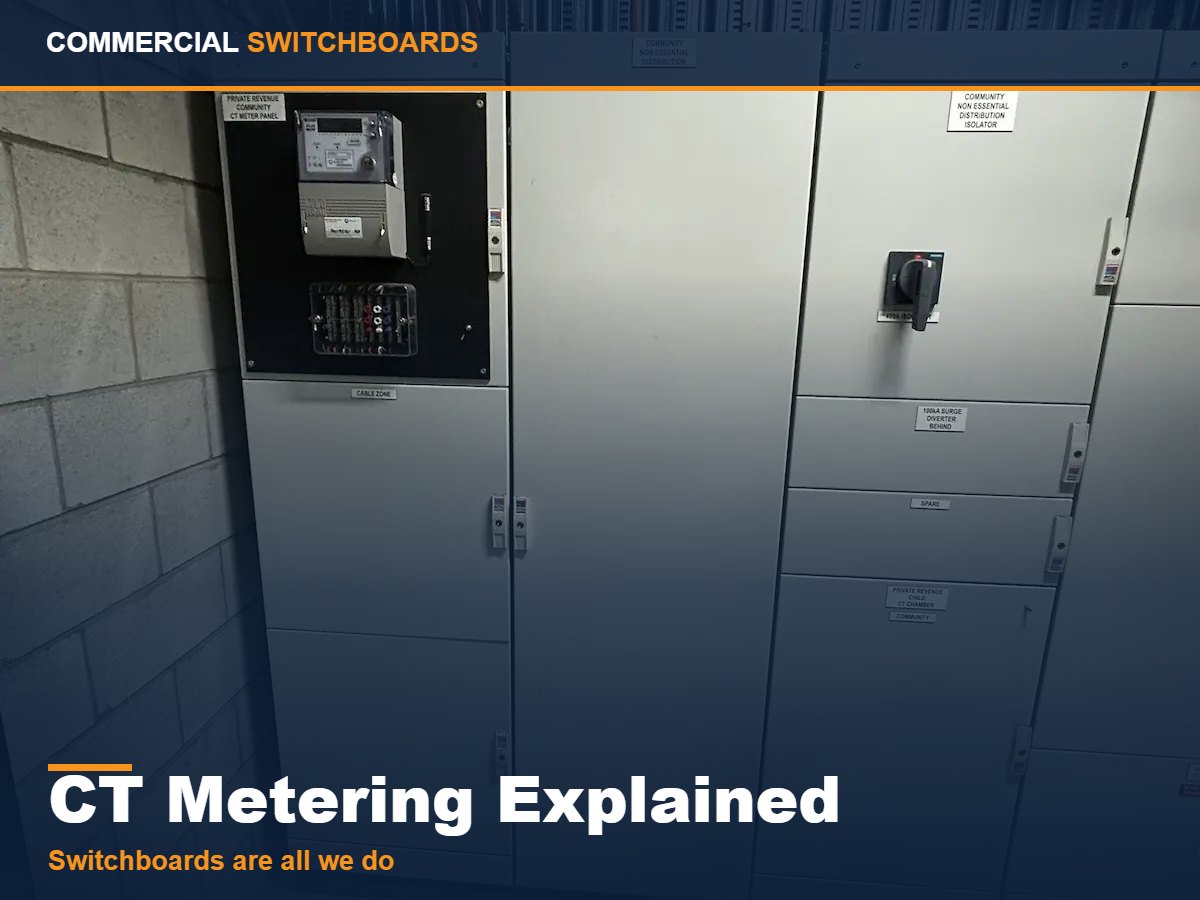
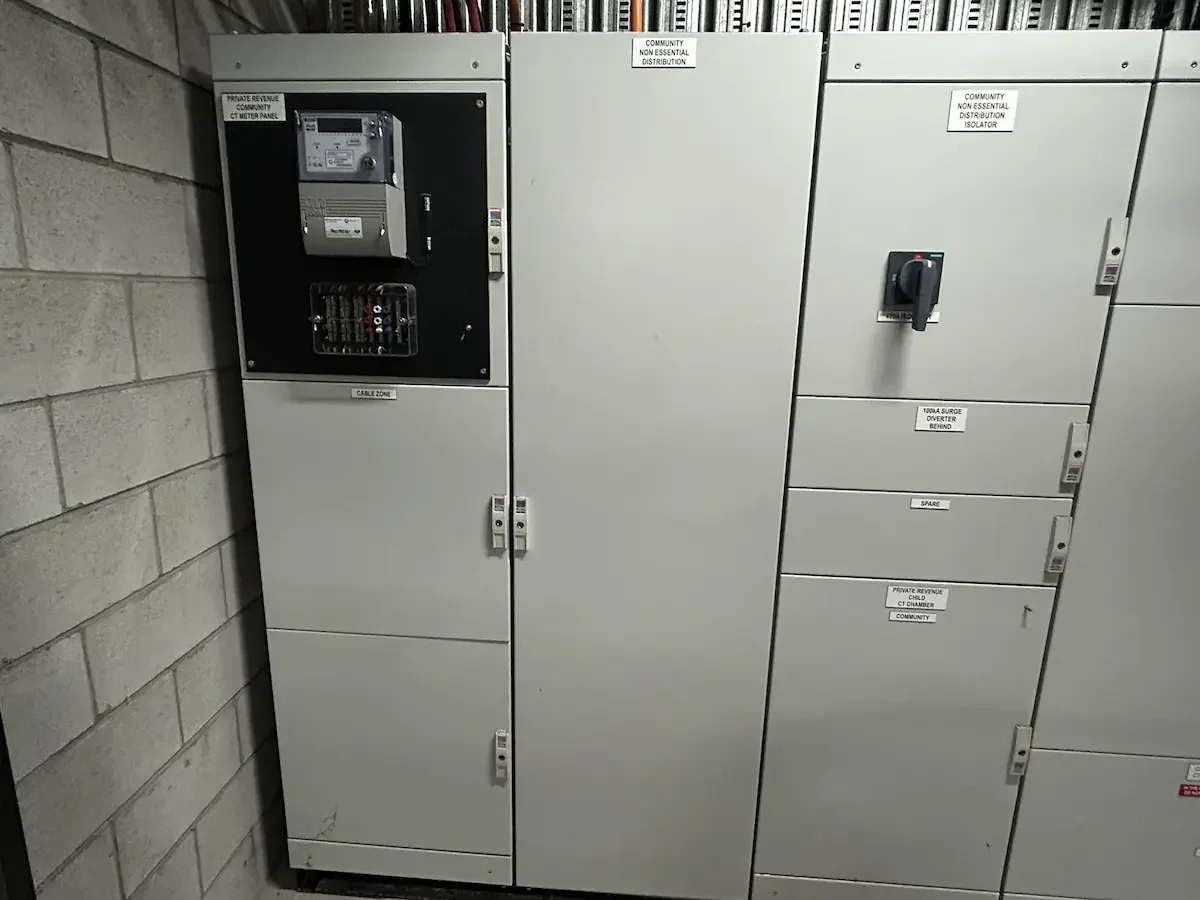
CT metering uses current transformers (CTs) to measure the electricity used on a large supply. A CT is a ring that clamps around each phase conductor and produces a small, proportional current that the meter reads. Rather than passing the full site current through the meter, which is not practical at high amperages, the CTs scale it down to a safe, measurable level. The meter then multiplies the reading back up by the CT ratio to record the real consumption.
When is CT metering required?
As a general rule, CT metering is required once the supply exceeds around 100 amps per phase, though the exact trigger is set by the Energex metering and connection standards. It is common on:
- Commercial buildings increasing their supply capacity
- Sites adding three-phase machinery, HVAC or EV charging
- New commercial and industrial connections above the direct-meter limit
- Multi-tenant buildings with large combined demand
Direct metering vs CT metering
| Direct metering | CT metering | |
|---|---|---|
| Supply size | Up to ~100A per phase | Above ~100A per phase |
| How it measures | Full current through the meter | Current transformers scale it down |
| Where used | Homes, small commercial | Larger commercial and industrial |
| Energex involvement | Standard | Required, with metering coordination |
What is involved in a CT metering installation on a commercial site
- Confirm the supply size and the required CT ratio
- Install the current transformers on each phase in the switchboard
- Fit a compliant metering panel and wiring to the Energex standard
- Coordinate the supply application and connection with Energex
- Arrange metering installation and verification
This is almost always done as part of a switchboard upgrade or a new industrial switchboard build, because the CTs and metering panel are built into the board.
How CT metering coordination with Energex works
CT metering sits on the supply side, so it involves Energex directly: the supply application, the metering coordination and the connection scheduling all run through the network. A specialist lodges this early and manages it so the asset owner is not left dealing with the supply authority alone. Getting the CT ratio and metering layout right the first time avoids re-work and connection delays.
Why CT metering compliance matters
Why use a switchboard specialist
Because we build the board and the metering together, the CT metering is designed into the switchboard from the start, the CT ratio is correct for the supply, and the Energex coordination is handled end to end. For facility managers and commercial property owners, that means one accountable contractor from design to energisation.
CT metering: frequently asked questions
What does CT metering mean?
CT metering uses current transformers to scale down a large supply current so a standard meter can measure it accurately. It is used when the supply is too large for direct metering.
When is CT metering required?
Generally once the supply exceeds around 100 amps per phase, with the exact trigger set by the Energex metering and connection standards.
What is the difference between direct and CT metering?
Direct metering passes the full current through the meter and suits supplies up to about 100A per phase. CT metering uses current transformers to scale larger currents down.
Does CT metering involve Energex?
Yes. CT metering is on the supply side, so the supply application, metering coordination and connection all go through Energex.
Is CT metering part of a switchboard upgrade?
Usually yes. The current transformers and metering panel are built into the switchboard, so CT metering is installed as part of an upgrade or new connection.
Who should install CT metering?
A specialist switchboard contractor, because the CT ratio, metering layout and Energex coordination must match the standard exactly.
Related guides
- HV switchboards and substations explained
- What a commercial switchboard upgrade costs
- EV charging and your switchboard
Standards and references
- Energex (Queensland network operator and metering standards)
- Standards Australia (AS/NZS 61439 switchboard standard)
About the author
Anthony Nuich is the owner of Commercial Switchboards, the specialist switchboard division of SEQ Sparky Pty Ltd, holding QLD Electrical Contractor licence #90899. With 10+ years of commercial and industrial switchboard, CT metering and supply-upgrade experience across Brisbane and Queensland, Anthony reviews every project personally.
If your site is growing or adding load and may need CT metering, request an initial project review and we will confirm the supply, CT ratio and next steps.