QUICK ANSWER
A body corporate is generally responsible for the common-property switchboard and main supply, while individual lot owners are responsible for the switchboard inside their own lot. The body corporate has a duty to keep common electrical assets safe, compliant and maintained. Where responsibility sits exactly depends on the community management statement, but the common main switchboard almost always falls to the body corporate.
Switchboards are one of the most overlooked assets a body corporate manages, right up until one fails and a building loses power. For committees and strata managers, the questions are always the same: who is responsible for the switchboard, what does the body corporate have to maintain, and what happens if it is neglected? This guide sets out body corporate switchboard responsibilities in plain English so committees can budget, plan and stay compliant.
Who is responsible for a body corporate switchboard?
As a general rule, the split follows the property boundary. The body corporate is responsible for common property, which includes the main switchboard, the main supply and any boards serving shared areas such as lobbies, car parks, lifts and common lighting. Individual lot owners are responsible for the switchboard and wiring inside their own lot. The exact boundary is set by the community management statement and the relevant body corporate legislation, but the common main switchboard is almost always a body corporate responsibility.
Common property vs lot property
| Asset | Usually responsible |
|---|---|
| Main switchboard / main supply | Body corporate |
| Common-area distribution boards | Body corporate |
| House meter and common lighting circuits | Body corporate |
| Switchboard inside an individual lot | Lot owner |
What the body corporate must maintain
- Keep the common switchboard safe and compliant with current standards
- Arrange regular inspection and testing of common electrical assets
- Act on defects, heat, tripping or signs of failure
- Keep records of electrical work and maintenance
- Upgrade ageing or non-compliant common boards
Signs a body corporate switchboard needs attention
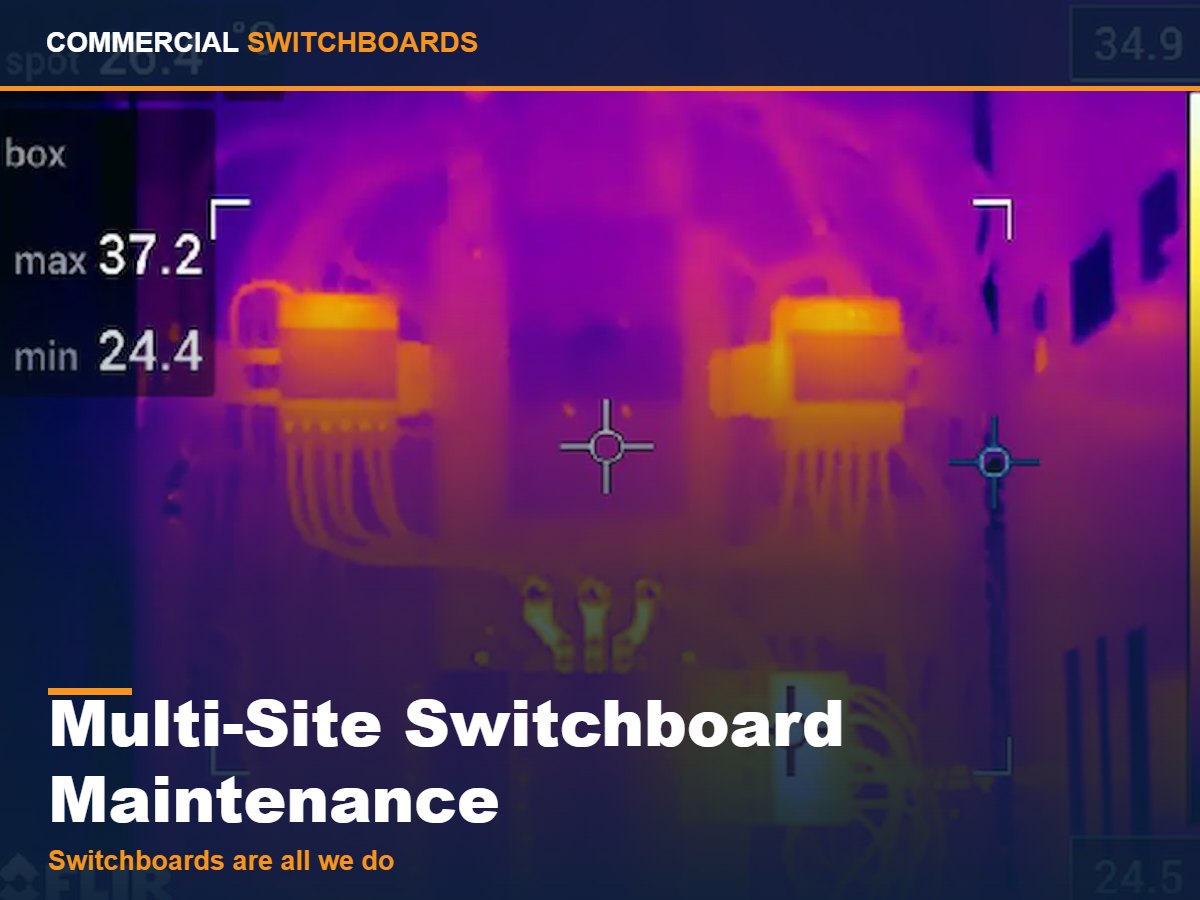
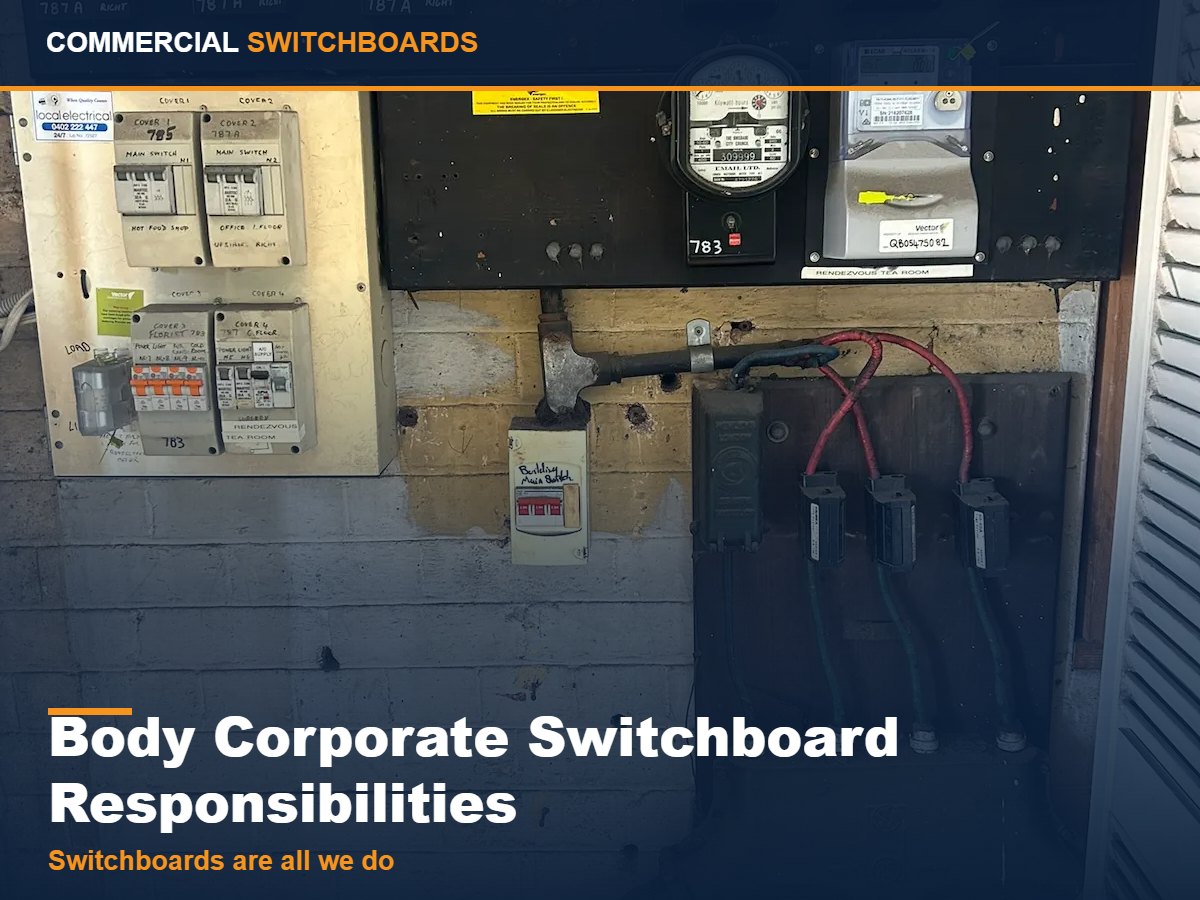
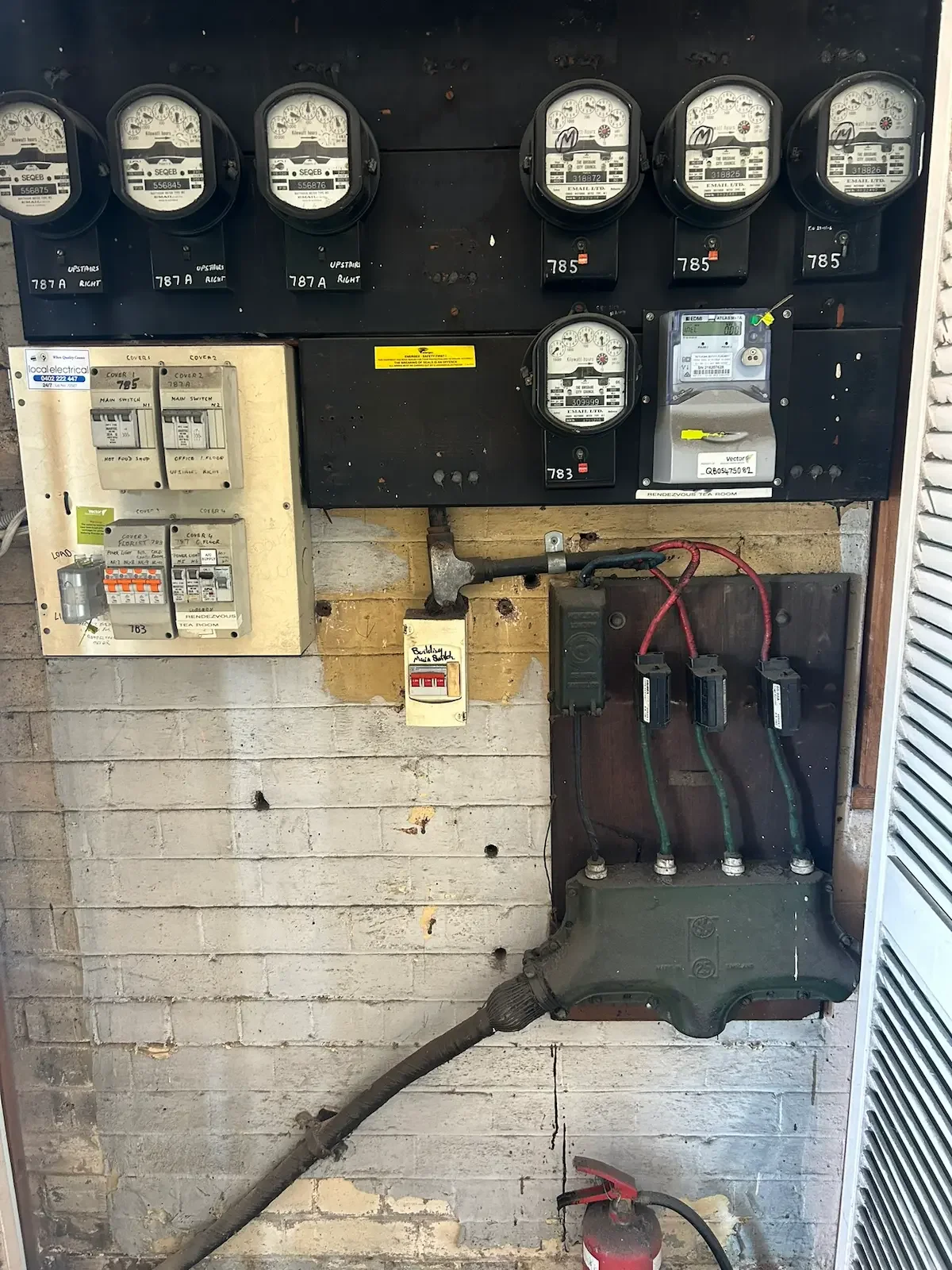
Common boards in older strata complexes are often original, overloaded and rarely inspected. Warning signs include nuisance tripping, a burning smell in the riser or switch room, discolouration on the board, rewireable fuses or no spare ways. Any of these should prompt an inspection, ideally with switchboard thermal imaging to find overheating connections before they fail.
The duty to keep common assets safe
Maintenance and upgrades for strata switchboards
The most cost-effective approach is a planned switchboard maintenance program for the common boards, with periodic thermal imaging and testing. Where a board is overloaded, non-compliant or repeatedly failing, a switchboard upgrade brings it up to standard and removes the risk. If a common board has already failed, a fast switchboard repair restores power to the complex while a permanent fix is planned.
Why use a switchboard specialist
Body corporate switchboard work needs a contractor who understands multi-tenant boards, common property boundaries and AS/NZS 61439 compliance, and who can work around residents with proper notification. Because switchboards are all we do, committees and strata managers get genuine depth, clear documentation and a single point of accountability for every body corporate switchboard project.
Body corporate switchboard responsibilities: frequently asked questions
Who is responsible for the switchboard in a strata complex?
The body corporate is generally responsible for the common-property switchboard and main supply; individual lot owners are responsible for the board inside their own lot. The community management statement sets the exact boundary.
Does the body corporate have to maintain the main switchboard?
Yes. The common main switchboard is common property, and the body corporate has a duty to keep it safe, compliant and maintained.
Who pays for a common switchboard upgrade?
Upgrades to common-property boards are funded by the body corporate, usually through the administrative or sinking fund.
How do we know if our body corporate switchboard is unsafe?
Warning signs include nuisance tripping, a burning smell, discolouration, rewireable fuses or no spare ways. A licensed electrician can inspect and thermally image the board.
What are the risks of neglecting a common switchboard?
Fire, injury, power loss to the complex and a serious liability for the body corporate, which has a duty to maintain common property safely.
Who should work on a body corporate switchboard?
A licensed switchboard specialist who understands multi-tenant boards, common property and AS/NZS 61439 compliance.
Related guides
- Shopping centre switchboard maintenance
- Asbestos switchboard risks
- Safety switch rules for commercial switchboards
Standards and references
About the author
Anthony Nuich is the owner of Commercial Switchboards, the specialist switchboard division of SEQ Sparky Pty Ltd, holding QLD Electrical Contractor licence #90899. With 10+ years working on strata, commercial and industrial switchboards across Brisbane and Queensland, Anthony reviews every project personally.
If your committee needs clarity on a body corporate switchboard, or a board inspected, maintained or upgraded, request an initial project review and we will advise the next practical step.