QUICK ANSWER
A manufacturing switchboard is the heavy-duty main and distribution board that powers a factory or process plant, usually paired with a motor control centre (MCC) to start and protect the site machinery. It must handle high loads, motor starting currents and fault levels, be built to AS/NZS 61439, and be engineered for uptime, because on a production site every minute of downtime costs money.
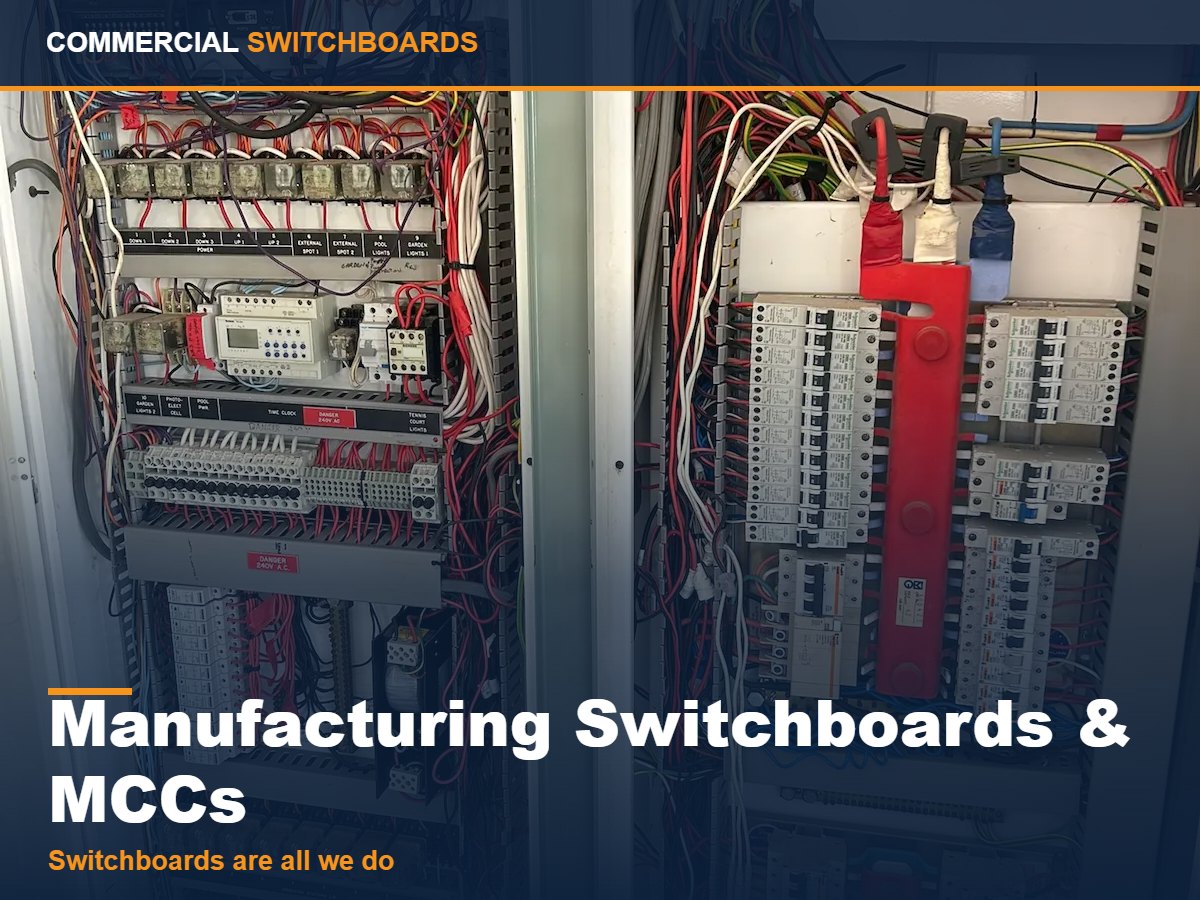
In manufacturing, the switchboard is not a background utility, it is production infrastructure. Conveyors, pumps, compressors, presses and process equipment all run from it, and a single fault can stop an entire line. A manufacturing switchboard has to do more than distribute power: it has to start and protect motors, ride through demanding loads, and stay running. This guide covers what a manufacturing switchboard and MCC need to deliver, how they are built, and how to keep a plant running.
What a manufacturing switchboard needs to handle
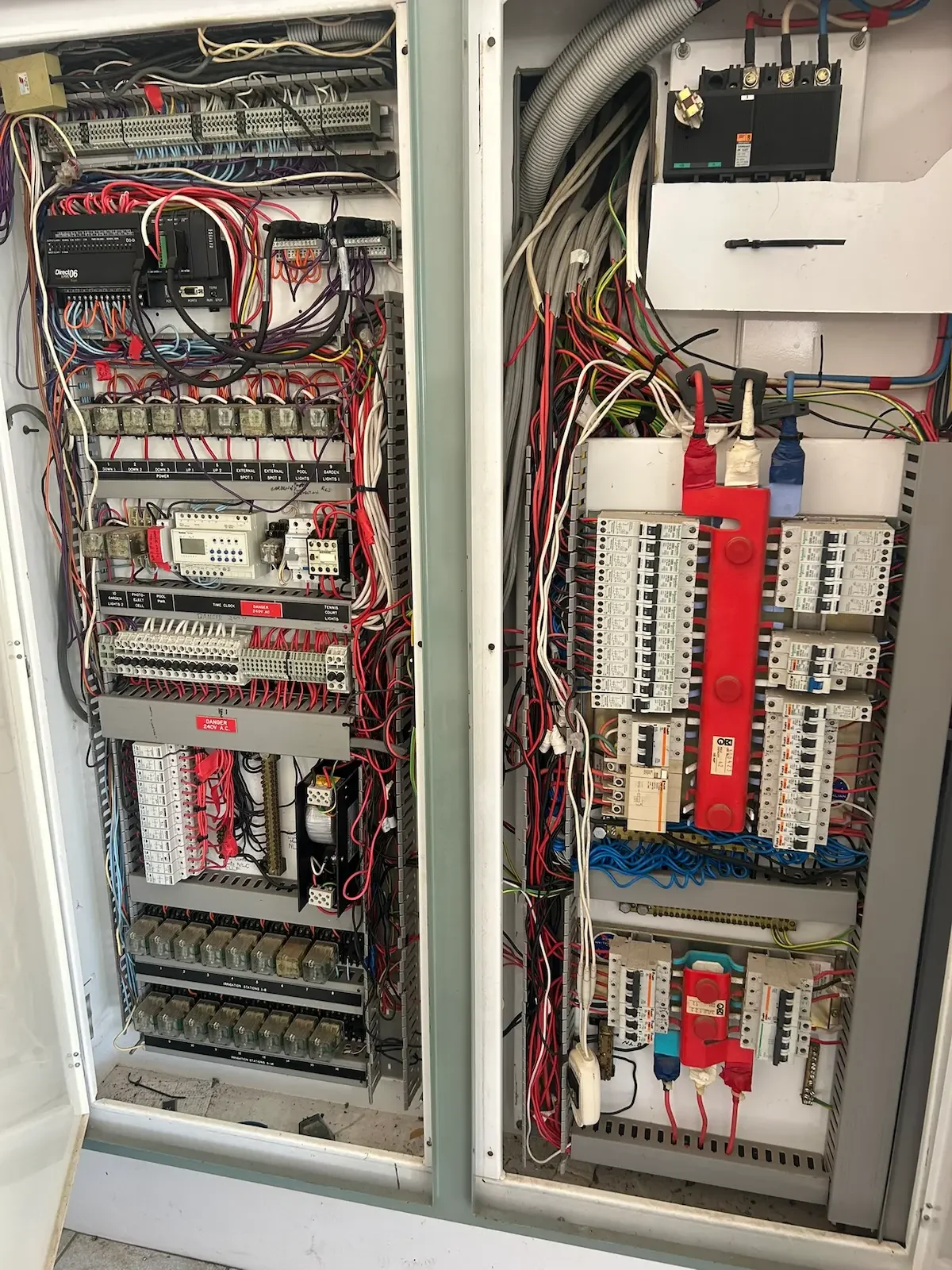
A factory puts demands on a switchboard that a normal commercial building never does: high continuous loads, large motor starting currents, harmonics from variable speed drives, and high fault levels. A manufacturing switchboard is engineered for all of this, with the right busbar rating, fault withstand, segregation and protection coordination so a fault in one area does not take down the whole plant.
Switchboards and MCCs in manufacturing
Most manufacturing sites run a main industrial switchboard together with one or more motor control centres. The MCC centralises the starters, variable speed drives and protection for the site motors, with each motor in its own module so one circuit can be serviced without stopping the plant. The main board handles incoming supply, metering and distribution; the MCC handles the machinery.
| Assembly | Role on a manufacturing site |
|---|---|
| Main switchboard | Incoming supply, metering, distribution |
| Motor control centre (MCC) | Start, protect and control motors and drives |
| Distribution boards | Feed local equipment and areas |
| HV switchboard (large sites) | High voltage supply and transformers |
Why downtime makes reliability everything
Compliance and build quality
A manufacturing switchboard and MCC must be built and type-tested to AS/NZS 61439, with the fault ratings, segregation and documentation that heavy industrial use demands. On larger sites this can extend up to HV switchboards and substations feeding the plant transformers. This is specialist engineering, not general electrical work.
Maintaining a manufacturing switchboard
Planned switchboard maintenance is essential on a production site: thermal imaging to catch hot joints under heavy load, torque checks, drive and starter inspection, and testing. Catching a failing connection on a scheduled visit is far cheaper than losing a shift to an unplanned outage.
Upgrading an ageing manufacturing switchboard
As plants add machinery and capacity, original boards get overloaded and outdated. A planned switchboard upgrade, staged around production, right-sizes the board, brings it up to standard and removes the failure risk before it costs a shift.
Why use a switchboard specialist
Manufacturing switchboards and MCCs reward real industrial experience: motor protection coordination, VSD integration, fault ratings and AS/NZS 61439 compliance, all engineered for uptime. Because switchboards and MCCs are all we do, manufacturing sites get genuine depth and a single accountable contractor from design to commissioning.
Manufacturing switchboards: frequently asked questions
What is a manufacturing switchboard?
A heavy-duty main and distribution board that powers a factory or process plant, engineered for high loads, motor starting and fault levels, usually paired with a motor control centre.
Do manufacturing sites need an MCC?
Usually yes. An MCC centralises the starting, protection and control of the site motors, with each motor in its own module so one can be serviced without stopping the plant.
What standard must a manufacturing switchboard meet?
AS/NZS 61439, with the fault ratings, segregation and documentation that heavy industrial use requires.
How is downtime minimised during a switchboard upgrade?
The board is built off site and the changeover is staged around production, so the line is only interrupted in controlled windows.
How often should a manufacturing switchboard be maintained?
On a planned schedule with thermal imaging, torque checks and drive inspection, because a failure on a production site is costly.
Who should build a manufacturing switchboard?
A specialist switchboard and MCC contractor with industrial experience, working to AS/NZS 61439.
Related guides
Standards and references
About the author
Anthony Nuich is the owner of Commercial Switchboards, the specialist switchboard division of SEQ Sparky Pty Ltd, holding QLD Electrical Contractor licence #90899. With 10+ years building and maintaining industrial switchboards and MCCs across Brisbane and Queensland, Anthony reviews every project personally.
For a manufacturing switchboard or MCC project, or to set up maintenance for your plant, request an initial project review.