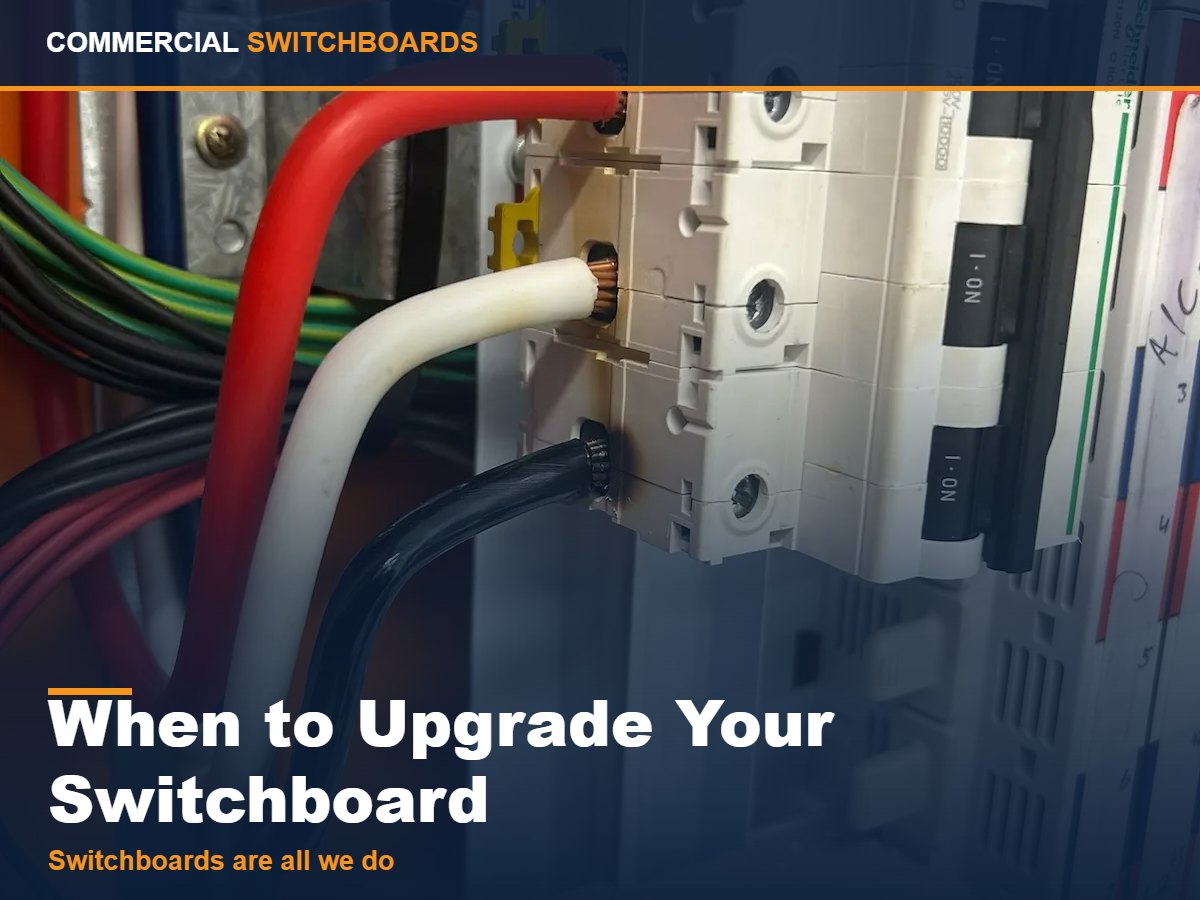
Switchboard upgrade signs are easy to miss until a board fails, and by then the choice has been made for you. A commercial main switchboard rarely dies overnight. It gives warning signs for months or years first. Knowing the switchboard upgrade signs lets a facility manager plan a controlled upgrade rather than scramble through an emergency, and it keeps the building safe, compliant and insurable in the meantime. Here are the seven clearest signs a commercial switchboard needs upgrading.
1. The board is simply old
Switchboards built more than 25 to 30 years ago often use rewireable fuses, ceramic bases and components that are no longer manufactured. Spare parts get harder to find, fault levels in the network have usually risen since the board was installed, and the design predates current safety expectations. Age on its own is not a fault, but it raises the odds of every other sign on this list.
2. Overheating and discolouration
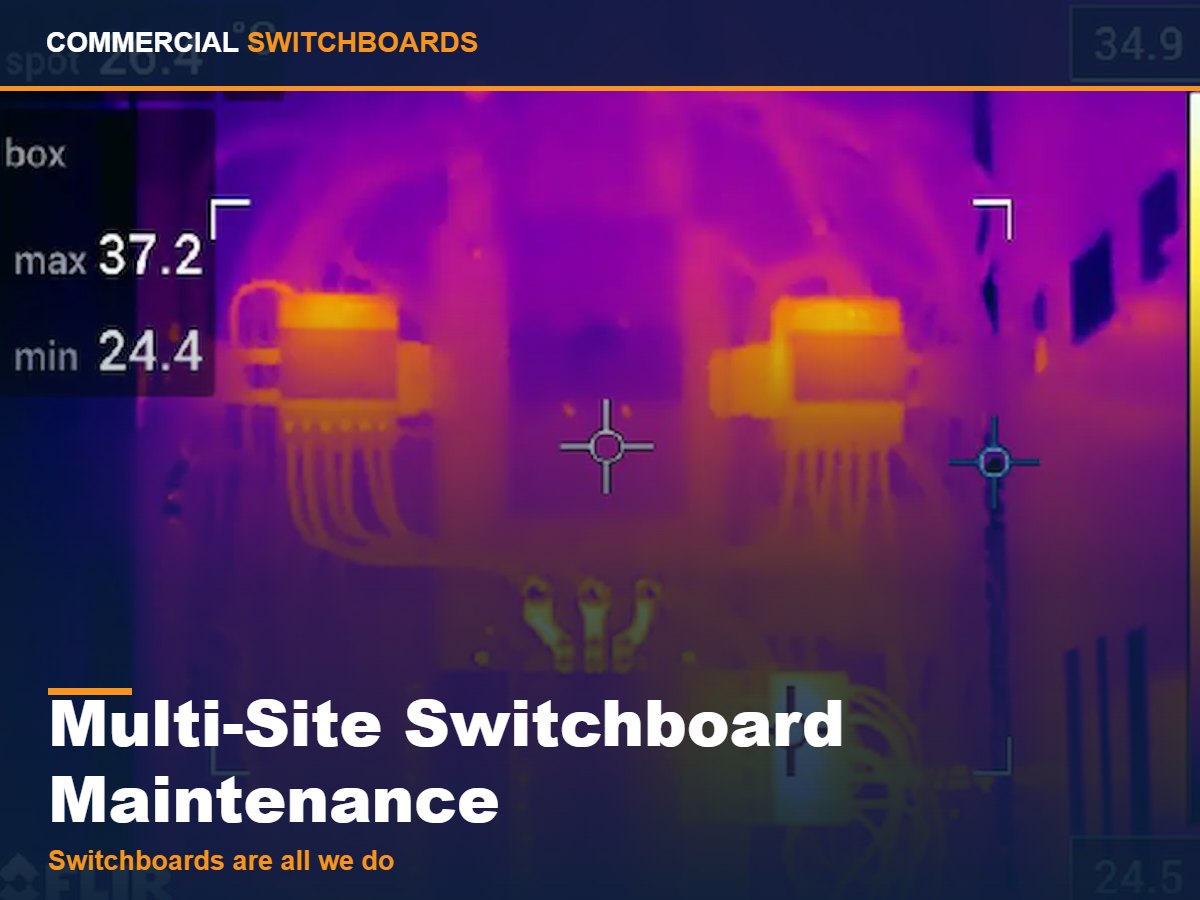
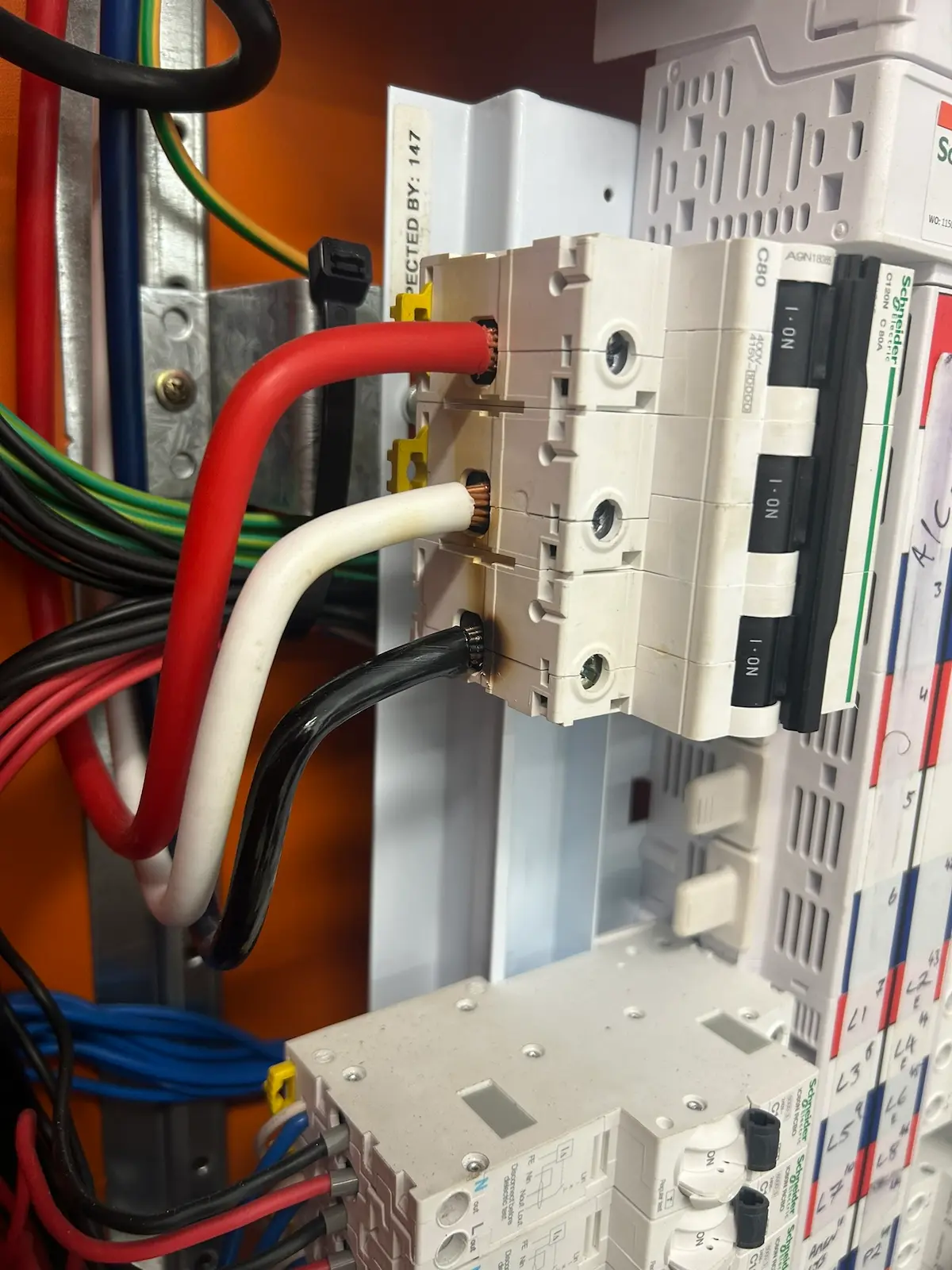
Brown or black scorch marks, a hot smell, melted insulation or warm escutcheon panels all point to connections running hotter than they should. Heat is the leading cause of switchboard failure, and a thermal imaging inspection will confirm exactly where it is coming from and how serious it is.
3. Frequent nuisance tripping
Breakers that trip for no obvious reason are often a sign the board is overloaded, the protection is failing or the original design no longer suits the load. Repeated resets are a workaround, not a fix, and they tend to mask a problem that is getting worse.
4. The board is full or over capacity
If there are no spare ways for a new tenancy, a fit-out or extra plant, the board has run out of room. Loading a board beyond its rating, or adding piggy-backed devices, pushes it outside its verified design and raises both the fault risk and the heat. A capacity review will confirm how much headroom is really left.
5. Asbestos or non-compliant materials
Many older boards use asbestos backing panels. These are a health and safety liability and have to be managed and removed under a licensed process during an upgrade. A board with asbestos is a clear candidate for replacement rather than ongoing patching.
6. Missing safety devices
No residual current devices, no surge protection or a board that was never brought up to current wiring rules leaves people and equipment exposed. An upgrade is the natural moment to bring protection up to standard and reduce the risk to staff and tenants.
7. Damage, corrosion or non-compliance
Water ingress, rust, physical damage or a board that no longer meets AS/NZS 61439 all mean the assembly can no longer be relied on. Insurance audits and council inspections routinely flag these, and a documented upgrade closes the gap. For the underlying standard, see Standards Australia.
What to do when you spot switchboard upgrade signs
One sign is worth watching. Two or more usually means it is time to plan. The first step is a condition assessment and load review, which tells you whether the board can be repaired, extended or needs full replacement, and lets the work be staged around the site rather than forced by a failure. On a multi-tenant site such as a shopping centre or commercial building, that planning is the difference between a smooth changeover and an emergency shutdown.
Commercial Switchboards delivers main switchboard upgrades across Brisbane and South-East Queensland, built to AS/NZS 61439 with full documentation and staged to keep the site running. If you have spotted any of these switchboard upgrade signs, request an initial project review.
Commercial switchboard upgrades: frequently asked questions
What are the signs a commercial switchboard needs upgrading?
Tripping under load, no spare ways, heat or discolouration, a burning smell, obsolete or unsafe gear, or a board that cannot support new equipment.
Is it cheaper to upgrade before the board fails?
Yes. A planned upgrade is far cheaper than an emergency one after an unplanned outage.
How long does a switchboard upgrade take?
The on site changeover is usually a day or two; design, manufacture and network coordination beforehand take a few weeks.
Can the upgrade be staged around trading hours?
Yes. We stage the changeover, often after hours, so disruption to your site stays minimal.
Related guides
- What a commercial switchboard upgrade costs
- How long a switchboard upgrade takes
- Switchboard upgrades in Brisbane
Standards and references
Anthony Nuich is the owner of Commercial Switchboards, the specialist switchboard division of SEQ Sparky Pty Ltd, holding QLD Electrical Contractor licence #90899. With 10+ years working on commercial and industrial switchboards across Brisbane and Queensland, Anthony reviews every project personally.