Switchboard thermal imaging frequency is the question most facility managers reach once they understand how useful the technology is. A thermal camera finds loose connections, overloaded circuits and failing components before they burn out, but scanning a board once and never again only gives you a single snapshot in time. So how often is enough? This guide covers the recommended switchboard thermal imaging frequency, what changes it and what a scan actually finds.
The recommended baseline is once a year
For most commercial and industrial switchboards, an annual scan is the accepted baseline switchboard thermal imaging frequency. A year is long enough to be practical and short enough to catch a developing hot spot before it turns into a failure, and it lines up with what many insurers and maintenance programs expect. An annual scan also gives you a year-on-year record, so a connection that is slowly heating up shows a clear trend rather than a one-off reading.
When you need it more often
Annual is a starting point, not a hard rule. Lift the switchboard thermal imaging frequency to every six months, or even quarterly, where any of the following apply:
- Boards running close to their rated capacity or with high continuous load.
- Critical sites that cannot tolerate an outage, such as shopping centres, aged care facilities and data rooms.
- Harsh environments with heat, dust, vibration or coastal salt air.
- Older boards, or boards with a history of nuisance tripping or past faults.
- Boards that feed motors, compressors or other equipment with heavy start-up loads.
What a thermal scan finds
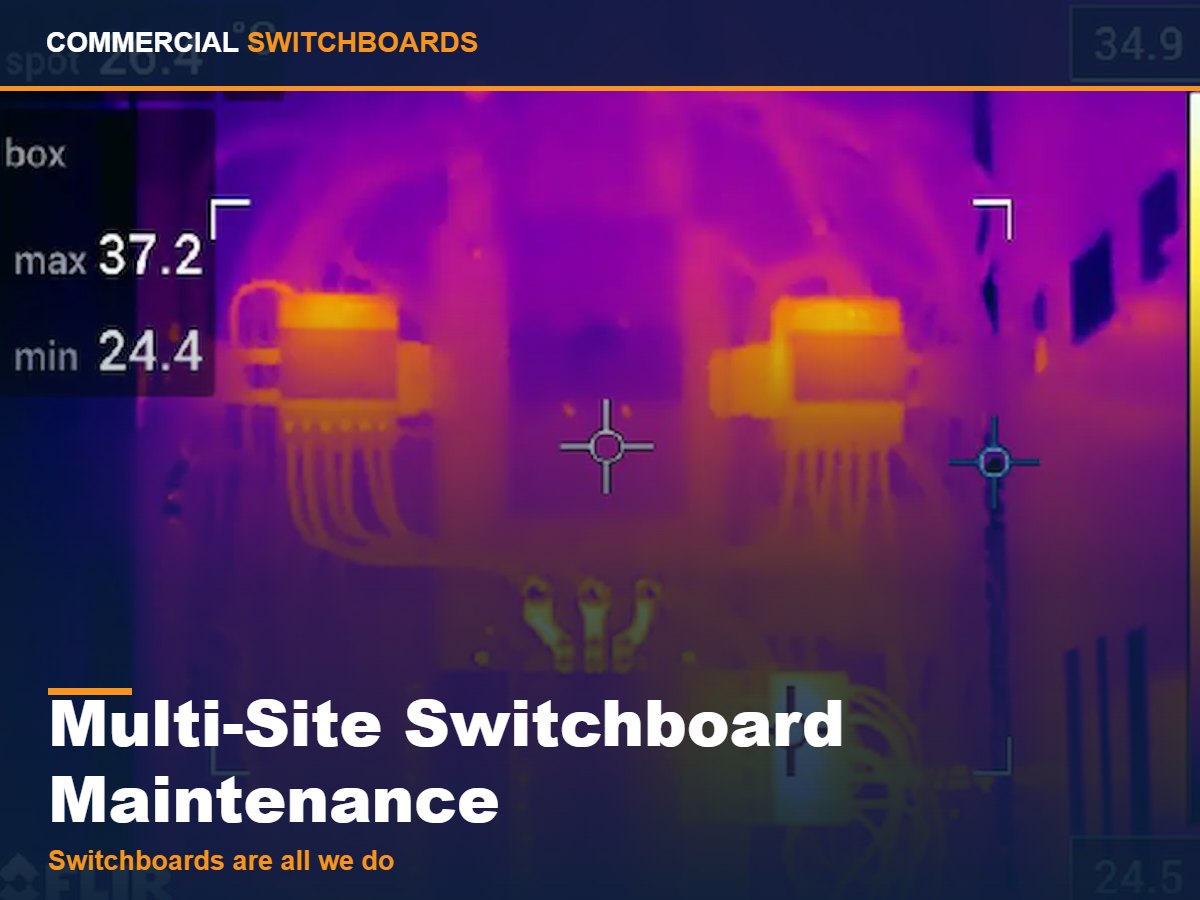
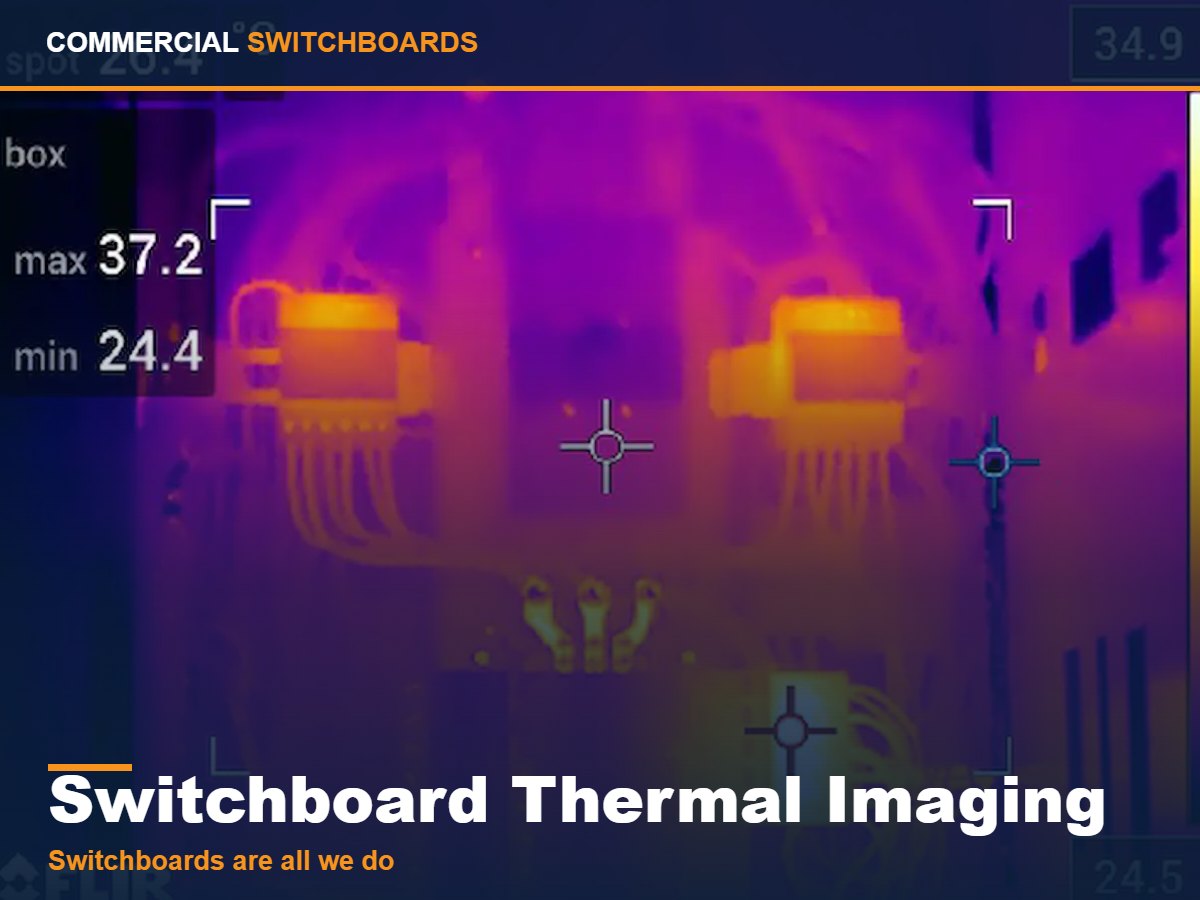
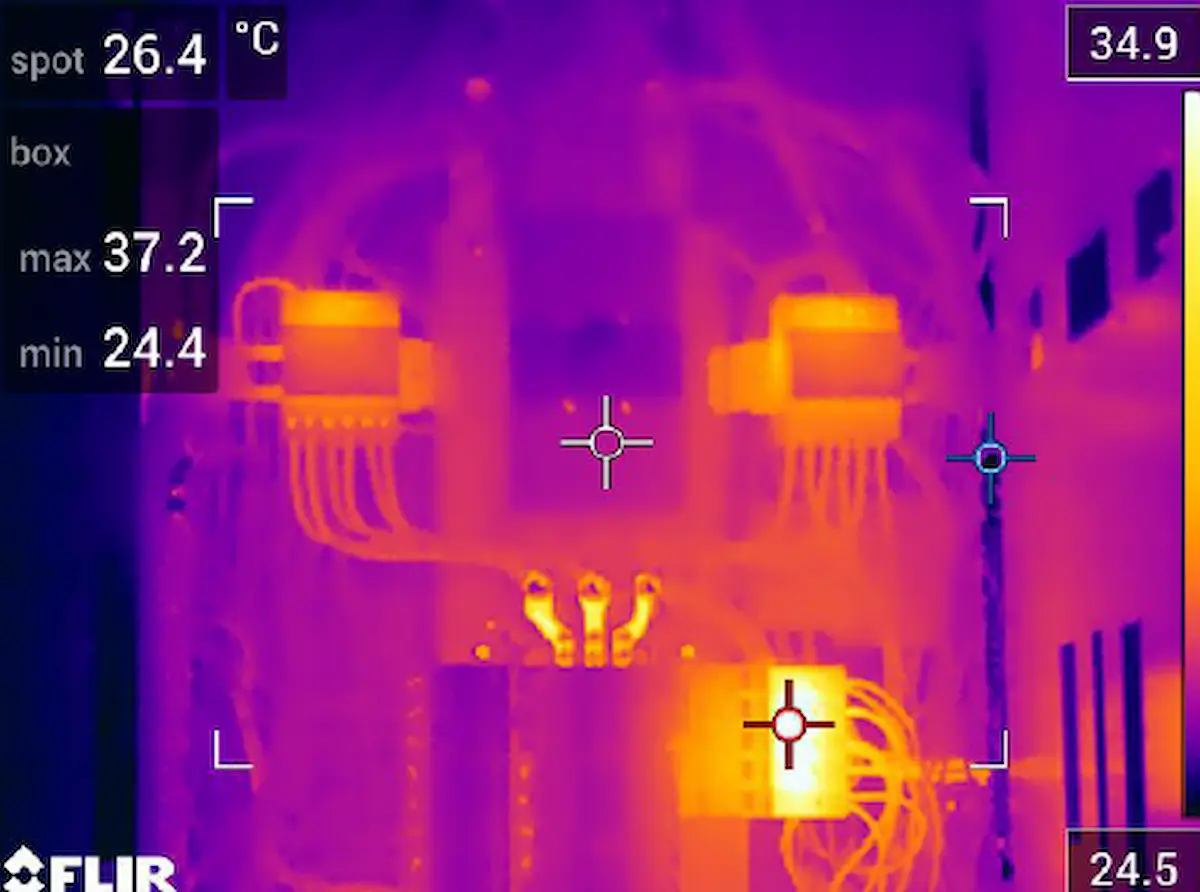
The most common finding is a loose or under-torqued termination, which heats up under load and slowly cooks the surrounding insulation. A scan also picks up overloaded circuits, phase imbalance, failing breakers and isolators, and undersized cabling. A connection running 30 to 40 degrees above the surrounding terminals is on a clear path to failure, and a difference of more than 40 degrees is usually treated as urgent.
How a thermal scan is carried out
A proper inspection is more than waving a camera at a board. The technician removes the escutcheon or covers so the live connections are visible, scans every phase, busbar, breaker and outgoing termination, and records the temperature of each against the surrounding components and the ambient. Findings are graded by severity, photographed, and written up in a dated report with recommended actions. That report is what gets handed to the asset owner and, if needed, the insurer.
It has to be done under load
Thermal imaging only works while the board is carrying current, ideally at around 40 percent load or higher. Scanning a board that is switched off or barely loaded tells you very little, which is why the scan is planned around the site running normally rather than during a shutdown.
Thermal imaging, compliance and insurance
Insurers increasingly ask for evidence of regular thermal scans, and a dated report with clear images is exactly that evidence. Folding the scan into a scheduled program keeps the report current and means any defect found is rectified before it becomes a claim. For larger portfolios, a fixed switchboard thermal imaging frequency across every site also makes budgeting and compliance reporting far simpler.
Build it into a maintenance schedule
The simplest approach is to fold the scan into a scheduled switchboard maintenance program, so the imaging, the report and any rectification happen together. Commercial Switchboards delivers switchboard thermal imaging across Brisbane and South-East Queensland as a standalone inspection or as part of an ongoing agreement. For guidance on electrical safety obligations, the Electrical Safety Office Queensland is a useful reference. To set up a scan, request an initial project review.
Switchboard thermal imaging: frequently asked questions
How often should a commercial switchboard be thermally imaged?
It depends on how hard the board works, how critical the site is and its age, but a regular interval as part of planned maintenance suits most commercial boards.
What does thermal imaging detect?
Hot joints, loose or overloaded connections and developing faults that run hot long before they fail, so they can be fixed before an outage.
Is thermal imaging worth the cost?
Yes. It is one of the most cost effective ways to prevent the unplanned failures that close a site and cost the most.
Do you provide thermal imaging?
Yes. We provide thermal imaging and planned maintenance for commercial, industrial and retail sites with clear reporting you can act on.
Related guides
- Multi-site switchboard maintenance
- Shopping centre switchboard maintenance
- Main switchboard failure: warning signs
Standards and references
Anthony Nuich is the owner of Commercial Switchboards, the specialist switchboard division of SEQ Sparky Pty Ltd, holding QLD Electrical Contractor licence #90899. With 10+ years working on commercial and industrial switchboards across Brisbane and Queensland, Anthony reviews every project personally.