QUICK ANSWER
A safety switch (RCD) cuts power in milliseconds when it detects current leaking to earth, protecting people from electric shock. On commercial switchboards, safety switch protection is required on most final subcircuits under the wiring rules, and the modern approach is to fit RCBOs that combine safety switch and circuit protection per circuit. Older boards without safety switches should be upgraded.
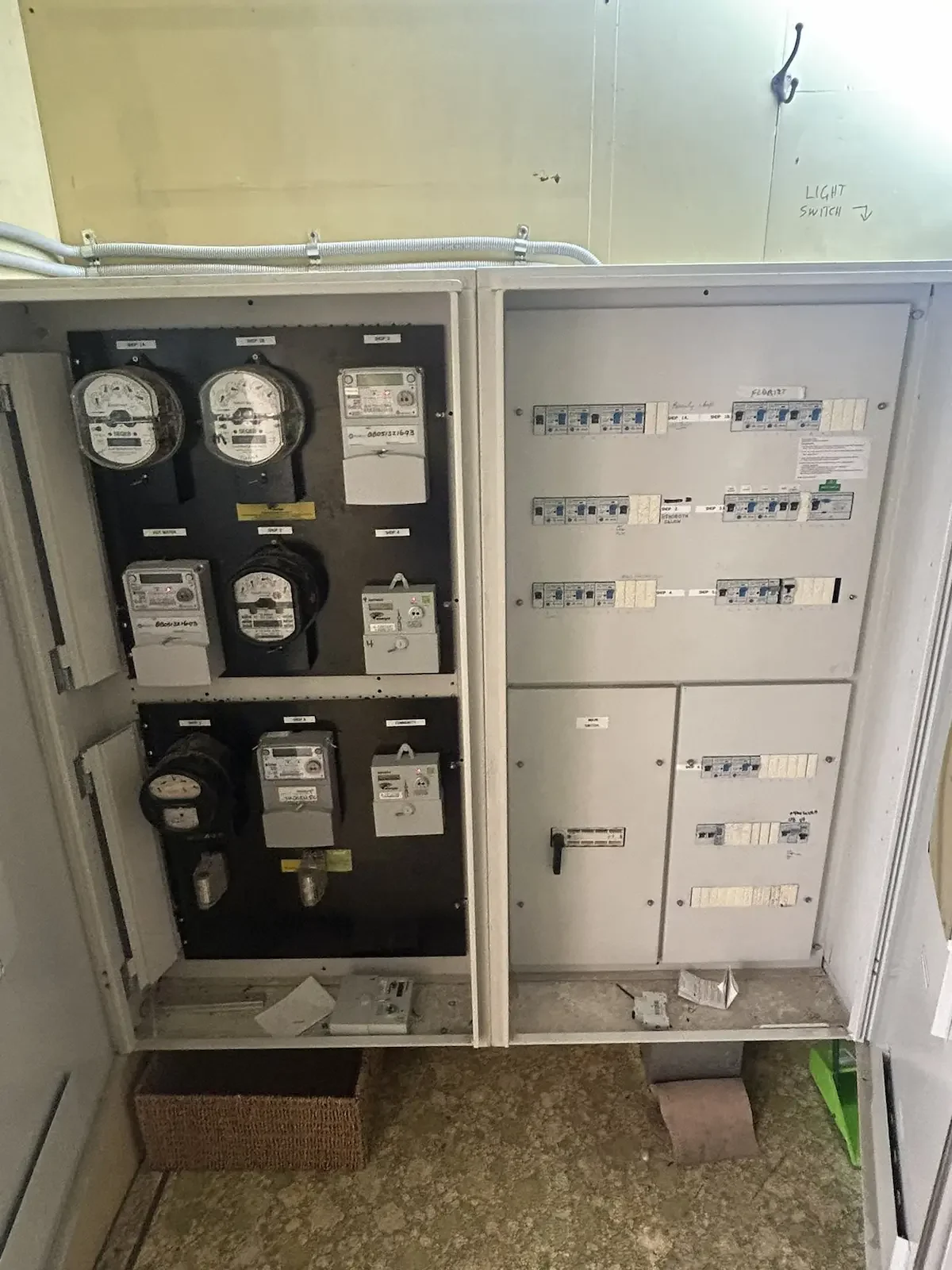
A safety switch is the difference between a harmless fault and a fatal one. On a commercial site, where there are staff, customers and a lot of equipment, getting safety switch protection right is both a legal requirement and a duty of care. Yet many older commercial switchboards still run on fuses or plain circuit breakers with little or no safety switch protection. This guide explains the safety switch rules for commercial switchboards, the difference between the devices, and what to do if your board falls short.
What is a safety switch?
A safety switch, also called an RCD (residual current device), constantly compares the current flowing out to the current flowing back. If it detects an imbalance, meaning current is leaking to earth, often through a person, it disconnects the circuit in around 30 milliseconds. A circuit breaker protects the wiring from overload and short circuit; a safety switch protects people from electric shock. They do different jobs, which is why a commercial board needs both a circuit breaker and a safety switch on its circuits.
Safety switch requirements for commercial switchboards
Under AS/NZS 3000, safety switch (RCD) protection is required on most final subcircuits, including socket outlets, lighting and many fixed-equipment circuits. The exact requirements depend on the circuit type and when the installation or alteration was done, but the direction is clear: more circuits require safety switch protection over time, and any new work or board upgrade must comply. For commercial operators this is also a workplace safety obligation, not just a wiring rule.
Safety switch types: RCD vs RCBO vs circuit breaker
| Device | What it protects |
|---|---|
| Circuit breaker (MCB) | Wiring, from overload and short circuit |
| Safety switch (RCD) | People, from electric shock (earth leakage) |
| RCBO | Both, per individual circuit |
Modern commercial boards increasingly use RCBOs as the safety switch of choice, which combine safety switch and circuit protection in one device per circuit. This means a fault on one circuit only trips that circuit, rather than a shared safety switch taking out a whole group, which matters a lot on a trading site.
Where safety switches are required
- Socket outlet circuits
- Lighting circuits
- Many fixed-equipment and final subcircuits
- New circuits and any altered circuits
- Circuits in higher-risk areas
Testing safety switches
Safety switches are mechanical and can fail over time, so they must be tested. Commercial sites should test safety switches on a schedule, and a test record is part of good electrical compliance. This is built into a planned switchboard maintenance program, alongside thermal imaging and inspection.
Upgrading a board without safety switches
Why use a switchboard specialist
Getting safety switch protection right across a commercial board takes proper circuit-by-circuit design, correct RCBO selection and AS/NZS 3000 compliance. Because switchboards are all we do, the board is designed so faults are contained, people are protected and the installation is fully documented. For body corporate and commercial owners, that is a clear duty-of-care improvement.
Safety switch rules: frequently asked questions
What is a safety switch?
A safety switch (RCD) disconnects a circuit in milliseconds when it detects current leaking to earth, protecting people from electric shock. A circuit breaker, by contrast, protects the wiring.
Are safety switches required on commercial switchboards?
Yes. Under AS/NZS 3000, safety switch protection is required on most final subcircuits, and any new work or board upgrade must comply.
What is the difference between an RCD and an RCBO?
An RCD provides safety switch (earth leakage) protection; an RCBO combines safety switch and circuit-breaker protection in one device per circuit.
Do safety switches need testing?
Yes. Safety switches are mechanical and can fail, so they should be tested on a schedule as part of switchboard maintenance, with records kept.
My board has no safety switches. What should I do?
A board with no safety switch protection leaves people exposed and does not meet current standards. A switchboard upgrade to a modern RCBO board resolves it.
Who should upgrade safety switch protection?
A specialist switchboard contractor who can design the board circuit by circuit to AS/NZS 3000 and AS/NZS 61439.
Related guides
- Arc flash safety for switchboards
- Main switchboard failure: warning signs and fixes
- Switchboard form ratings explained
Standards and references
About the author
Anthony Nuich is the owner of Commercial Switchboards, the specialist switchboard division of SEQ Sparky Pty Ltd, holding QLD Electrical Contractor licence #90899. With 10+ years upgrading commercial, strata and industrial switchboards to current safety standards across Brisbane and Queensland, Anthony reviews every project personally.
If your commercial board needs safety switch protection added or upgraded, request an initial project review and we will advise the next practical step.