A load isolator failure on a trading supermarket leaves no room to wait. When the 800A load isolator on the main switchboard at the Mount Cotton IGA overheated and melted, the store could not simply close its doors and lose a day of trade. This case study covers how Commercial Switchboards managed the load isolator failure as an emergency, kept the IGA trading every day, and saw the permanent repair through over three weeks.
The load isolator failure
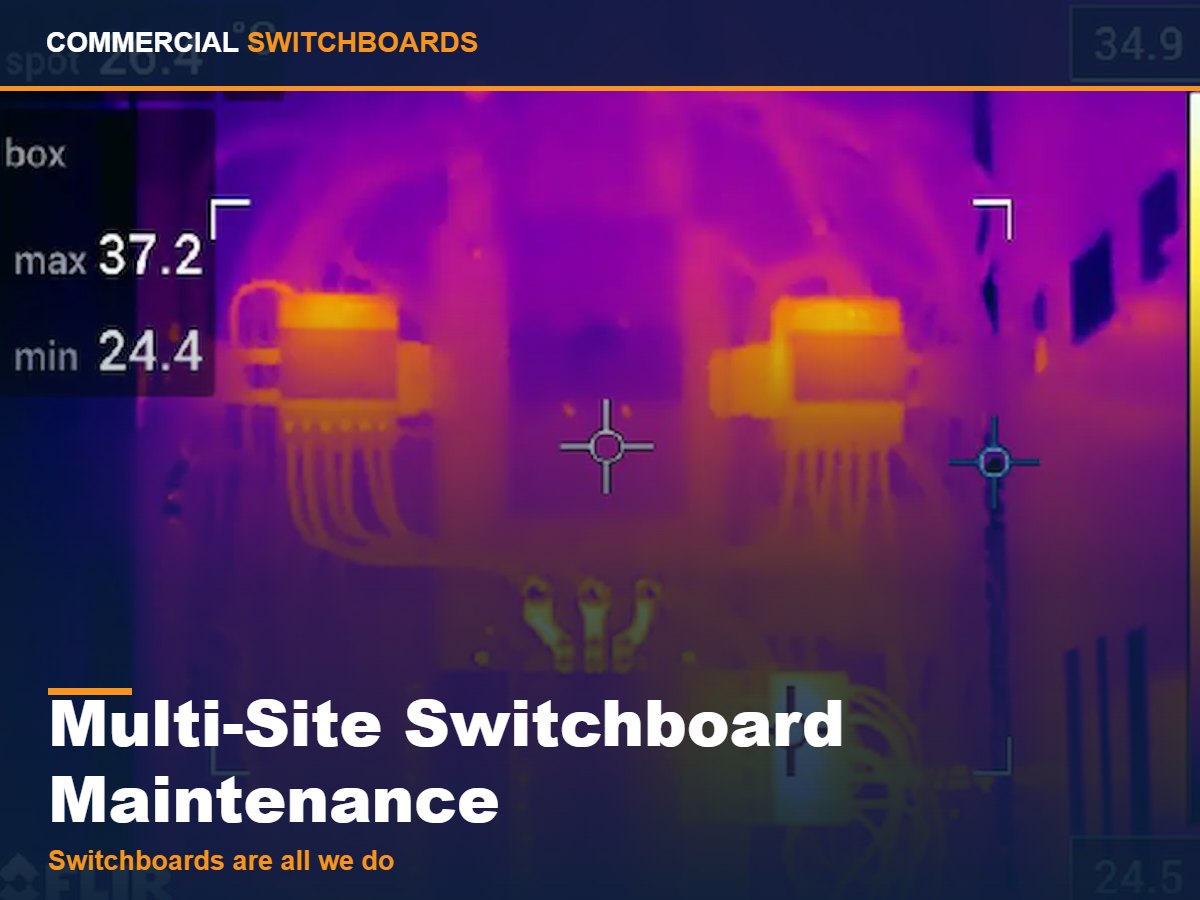
The load isolator is the device that lets the main switchboard be safely opened and closed under load. On this board it overheated and melted, cutting the normal supply path to a trading supermarket. A failure like this usually traces back to a connection that has slowly degraded and run hotter and hotter until it lets go, which is exactly the kind of fault a thermal scan is meant to catch early.
Because the event involved heat damage, we worked alongside forensic investigators to preserve and document the failure before any rectification began. That added a constraint most emergencies do not carry: the response had to keep the store running while protecting the evidence for the insurer, so nothing could be cleaned up or replaced until it had been recorded.
Emergency response that kept the IGA trading
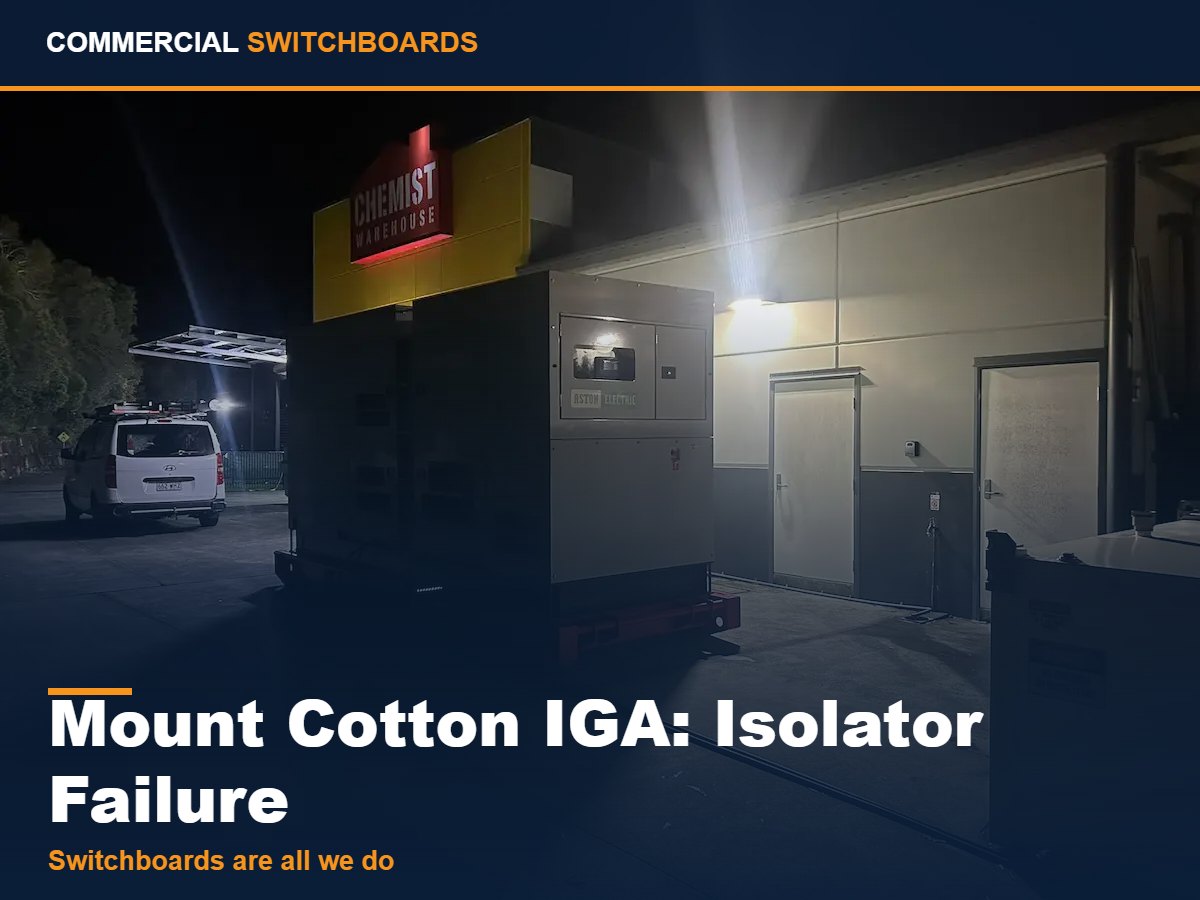
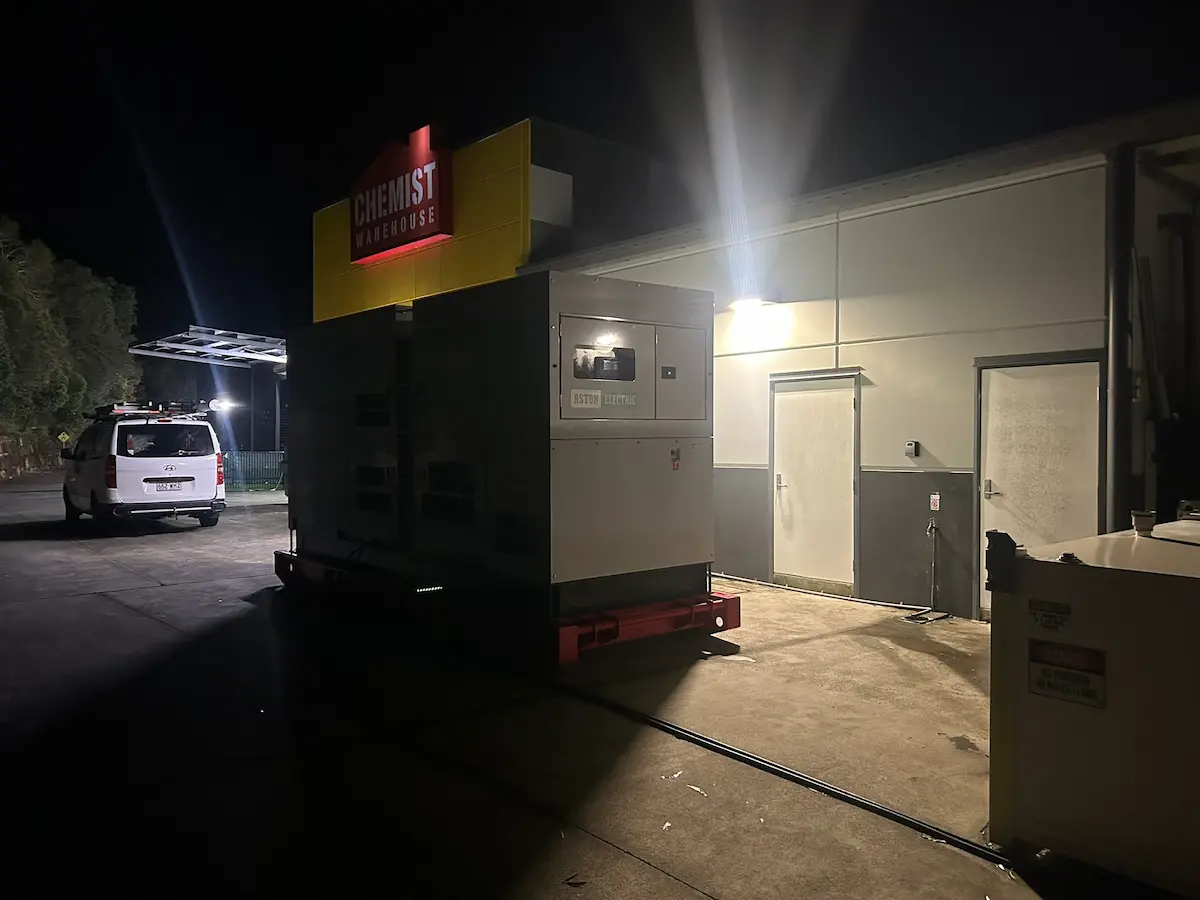
Within hours we deployed a 650kVA temporary generator sized to carry the full supermarket load. Refrigeration, lighting, registers and back-of-house plant stayed live, and the IGA traded as normal the same day. The generator was connected, fuelled and monitored as a managed temporary supply rather than a quick patch, which took the time pressure off the permanent repair and let it be planned and sequenced properly.
Why the original manufacturer mattered
We engaged the original switchboard manufacturer to identify and supply the correct replacement components. Matching the original parts is the only way to keep a board inside its verified design and compliant with AS/NZS 61439, so the repaired board stays compliant rather than becoming an unverified patchwork. With heavy switchgear on a manufacturing lead time, sourcing the right gear is what set the three-week timeline, not the labour.
Managing the repair around trade
Across the three weeks we liaised directly with the IGA to schedule each shutdown and changeover around quiet trading times. Every stage, from removing the damaged switchgear to fitting and testing the replacement, was staged so it landed with the least possible impact on the store. The temporary generator stayed in place as the safety net until the board was proven and ready to take the load again.
The outcome
The supermarket traded every single day of the three-week repair on temporary supply. The failed load isolator and the surrounding heat-damaged switchgear were replaced with manufacturer-supplied parts, the board was returned to a documented and compliant condition, and the forensic record was preserved throughout for the insurance claim. The final changeover back to mains supply was completed without disrupting trade.
Why temporary supply changes the outcome
The detail that made this job work was the speed of the temporary supply. Without it, a load isolator failure on a supermarket means spoiled stock, closed doors and lost trade for as long as parts take to arrive. With a correctly sized generator on site within hours, the failure became a managed repair instead of a shutdown, and the commercial cost to the IGA was kept to almost nothing. That is the difference between an emergency electrician and a switchboard specialist who carries generation, manufacturer relationships and compliance documentation as standard.
Switchboard emergencies on trading sites
A load isolator failure on a trading site is exactly the kind of switchboard emergency that needs temporary supply, manufacturer coordination and tight tenant liaison handled together by one contractor. Commercial Switchboards delivers switchboard repairs and emergency response across Brisbane and South-East Queensland, including for shopping centres and retail sites. If you are facing a switchboard emergency, request an initial project review.
Switchboard faults and failures: frequently asked questions
What is a load isolator and why does it fail?
It is a main switching device that isolates the board; failures come from age, heat, loose connections or overload, and can cut power to a whole site.
How quickly can a failed isolator be replaced?
With a specialist who understands main switchboards under load, often quickly, restoring power with minimal disruption.
What should I do if my main switchboard fails?
Keep clear of the board and call a specialist switchboard contractor; do not simply reset a fault that will not hold.
Do you respond to commercial board failures?
Yes. We diagnose and fix commercial board faults and failures across Brisbane and South East Queensland.
Related guides
- Main switchboard failure: warning signs
- When a switchboard needs upgrading
- What a commercial switchboard upgrade costs
Standards and references
Anthony Nuich is the owner of Commercial Switchboards, the specialist switchboard division of SEQ Sparky Pty Ltd, holding QLD Electrical Contractor licence #90899. With 10+ years working on commercial and industrial switchboards across Brisbane and Queensland, Anthony reviews every project personally.